
Mental & Behavioral Health
How to choose mental health practice management software
The right system should support the whole path from a prospective client’s first inquiry through intake, recurring care, communication, and the ongoing patient chart.
Therapists, psychiatrists, and behavioral health group practices do not need software that merely stores notes. They need a dependable way to move from inquiry to intake to recurring care while keeping the right information visible to the right people.
Begin before the person becomes a patient
Many evaluations begin with the chart, but the first operational step may be a phone call, referral, web inquiry, or request to join a waitlist. If those requests live in an inbox or spreadsheet, follow-up depends on one person remembering the next step.
Look for mental health practice management software that clearly separates prospective-client work from the clinical record while still giving the team a consistent process. A CRM or opportunities view can show who needs a response, what was requested, and whether an intake was scheduled.
1. Test intake as a complete workflow
A form builder is only one part of intake. Ask whether your team can create the forms it actually uses, send the right packet, see completion status, and find the returned information without downloading and re-uploading files.
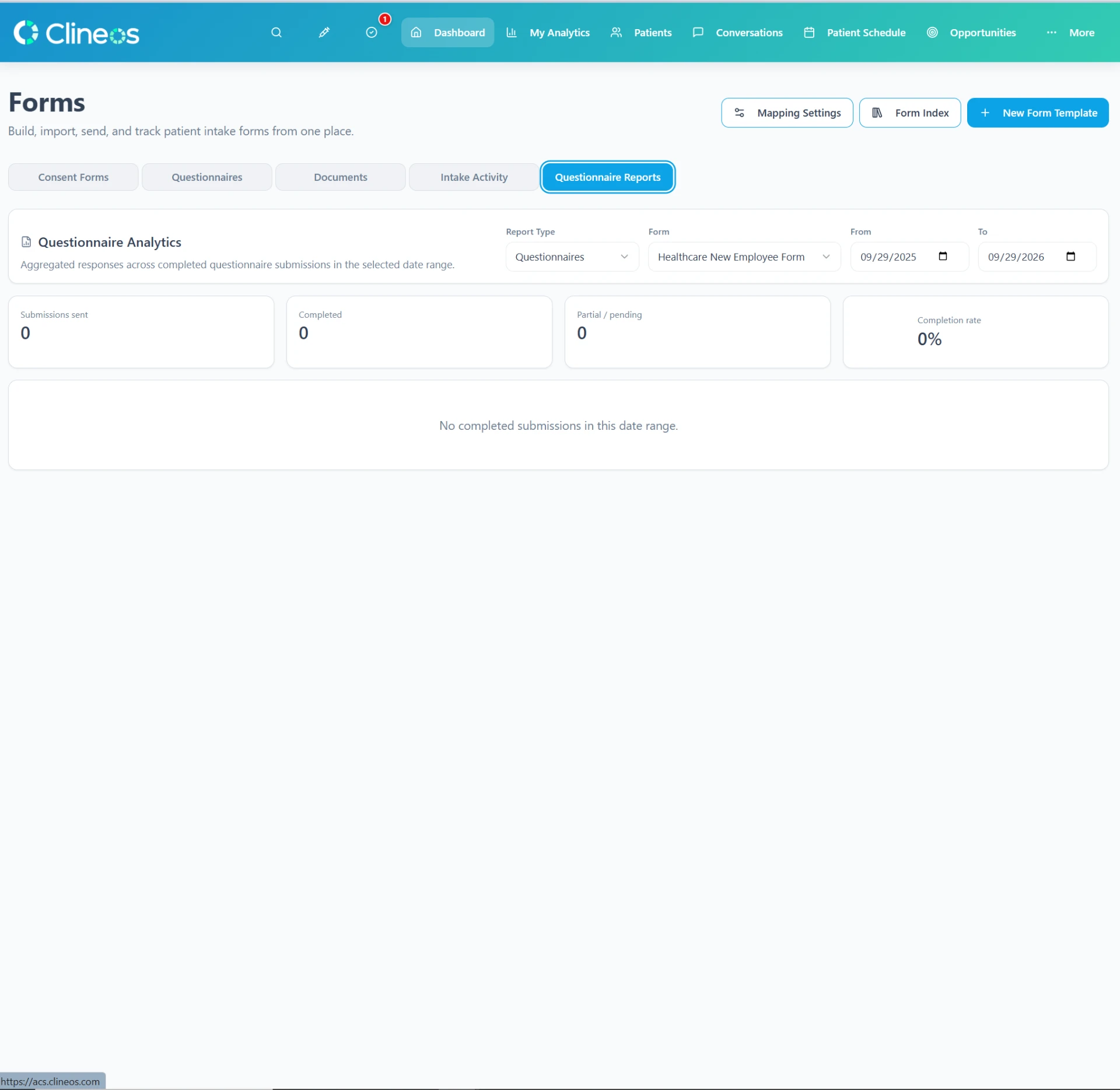
Build a test packet that resembles your real process. Include the consent, history, communication preference, and practice-specific questions your advisors have approved. Then follow it from creation through completion.
2. Make recurring scheduling easy for both staff and clinicians
Behavioral health calendars often include recurring therapy visits, medication-management appointments, multiple clinicians, and more than one location. During a demonstration, create a recurring series, change one appointment without disturbing the rest, and check how the update appears to everyone involved.
The goal is not a crowded calendar with more controls. It is a clear answer to who is seeing whom, when, and where — with fewer parallel spreadsheets.
3. Evaluate the chart for continuity, not just storage
A useful behavioral health EHR should help an authorized clinician find the history and context needed for the next encounter. Test common actions: reviewing a timeline, locating an earlier note, updating a problem or medication entry, and understanding who changed a record.
Ask whether permissions can reflect the roles in your practice. A scheduler, therapist, prescriber, and owner may need different access. Software should support your access policy; it cannot define the policy for you.
4. Choose communication with privacy and context in mind
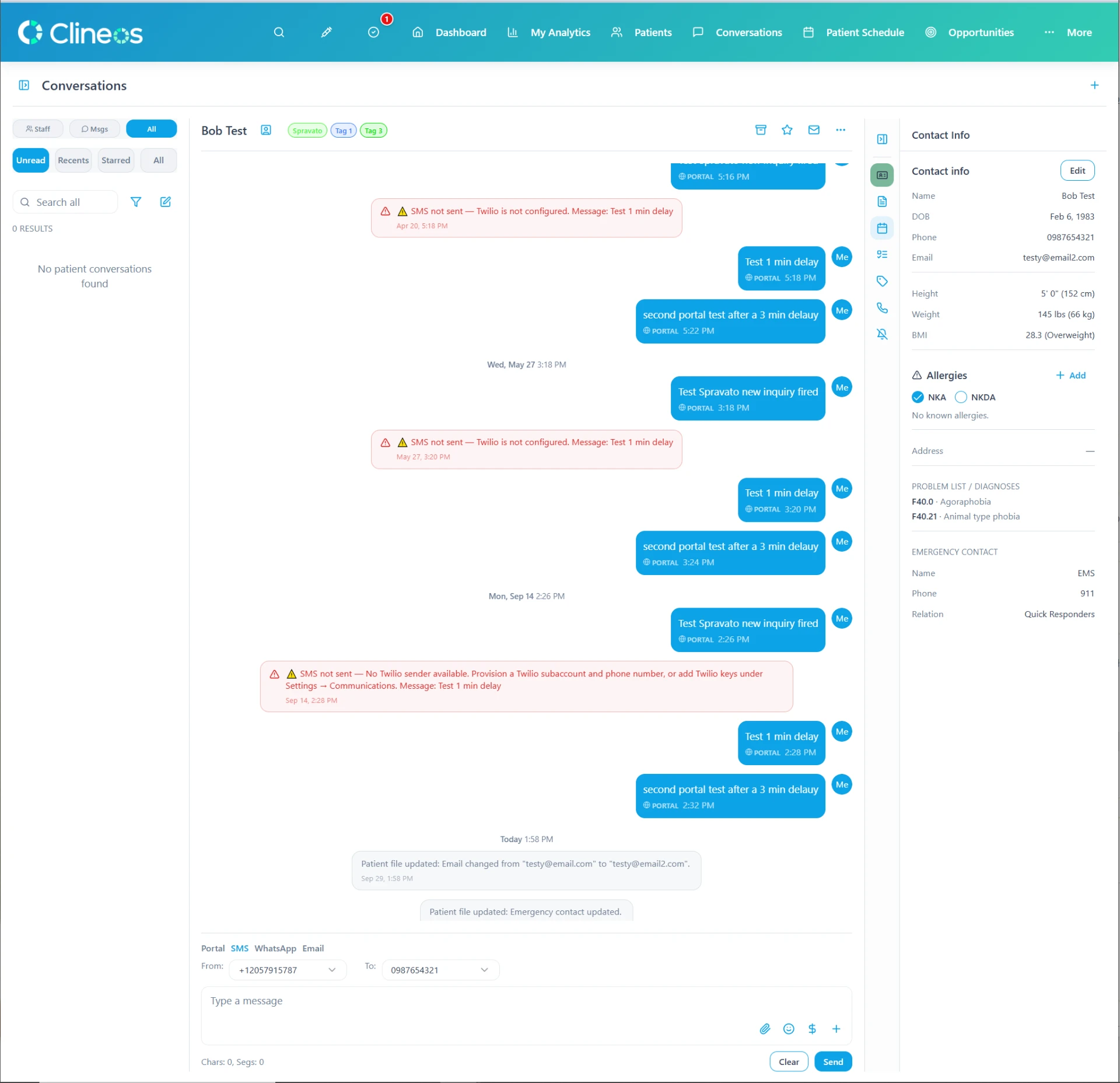
Phone, text, and email are convenient only when staff can tell what has already been said and what needs a response. Bringing communication into one patient-centered view can reduce the risk of an important message being stranded in one employee’s separate inbox.
5. Do not forget the business side of the practice
A solo or small group practice still has leads, staff time, multiple locations, and everyday supplies to manage. Keeping those functions close to scheduling and patient operations can reduce duplicate lists and give the owner a clearer picture of the work surrounding care.
If psychiatrists in the practice handle controlled medications, evaluate prescription and inventory workflows separately. Confirm the exact state, federal, payer, and professional requirements that apply; never assume a general feature replaces a required process or outside service.
A workflow-first buying checklist
- Can we track an inquiry without prematurely creating a patient chart?
- Can we build and manage our actual intake packet?
- Can we create and adjust recurring appointments?
- Can authorized staff understand the communication history?
- Can access differ by role and responsibility?
- Will the vendor sign the agreements our advisors require?
- Can we export our information in a usable form if we leave?
Clineos is designed as an all-in-one platform for independent practices. Read more about Clineos for mental and behavioral health or review the complete feature set.
Sources and further reading
- HHS: Does HIPAA permit providers to use email with patients?
- HHS: Guidance on HIPAA and cloud computing
- HealthIT.gov: How do I select a vendor?
This article is for general educational purposes and is not medical, legal, billing, or compliance advice. Requirements vary by practice, payer, state, and circumstance. Confirm obligations with qualified advisors and the agencies that govern your work.